Set the Team Up for Success
What it takes to set a technician up to win before he picks up a tool.
It is harder to teach a technician to think and plan than to train him on a specific repair.
People don’t care how much you know until they know how much you care. That line has stuck with me since the first time I heard it, and it kept coming back to me time and time again in the shop when I interacted with my team.
A manager who knows a lot but cares about nothing gets compliance through obedience, not genuine respect. He gets the men doing the minimum while he’s watching, but when he turns his back, that compliance is gone. In a healthy shop culture, respect always comes first, and knowledge second.
Everything I do as a leader comes back to one primary duty: I strive to set the team up for success every single day. I sit between three groups of people, each with their own set of challenges, priorities, and internal processes: the technician on the floor, the parts department, and the service department management team. I’m the bridge between them, and when information doesn’t cross that bridge properly — or at all, in some instances — the job usually stalls, and in the end, everyone pays for it, customer included.
Setting a team up for success isn’t just a “cool, catchy phrase.” It is a system, one that starts before anybody picks up a tool.
Clarify before you quote
It starts with the inspection. The technician evaluates the equipment, and every defect he finds gets documented and listed, item by item, by him. Right after that is when I come in.
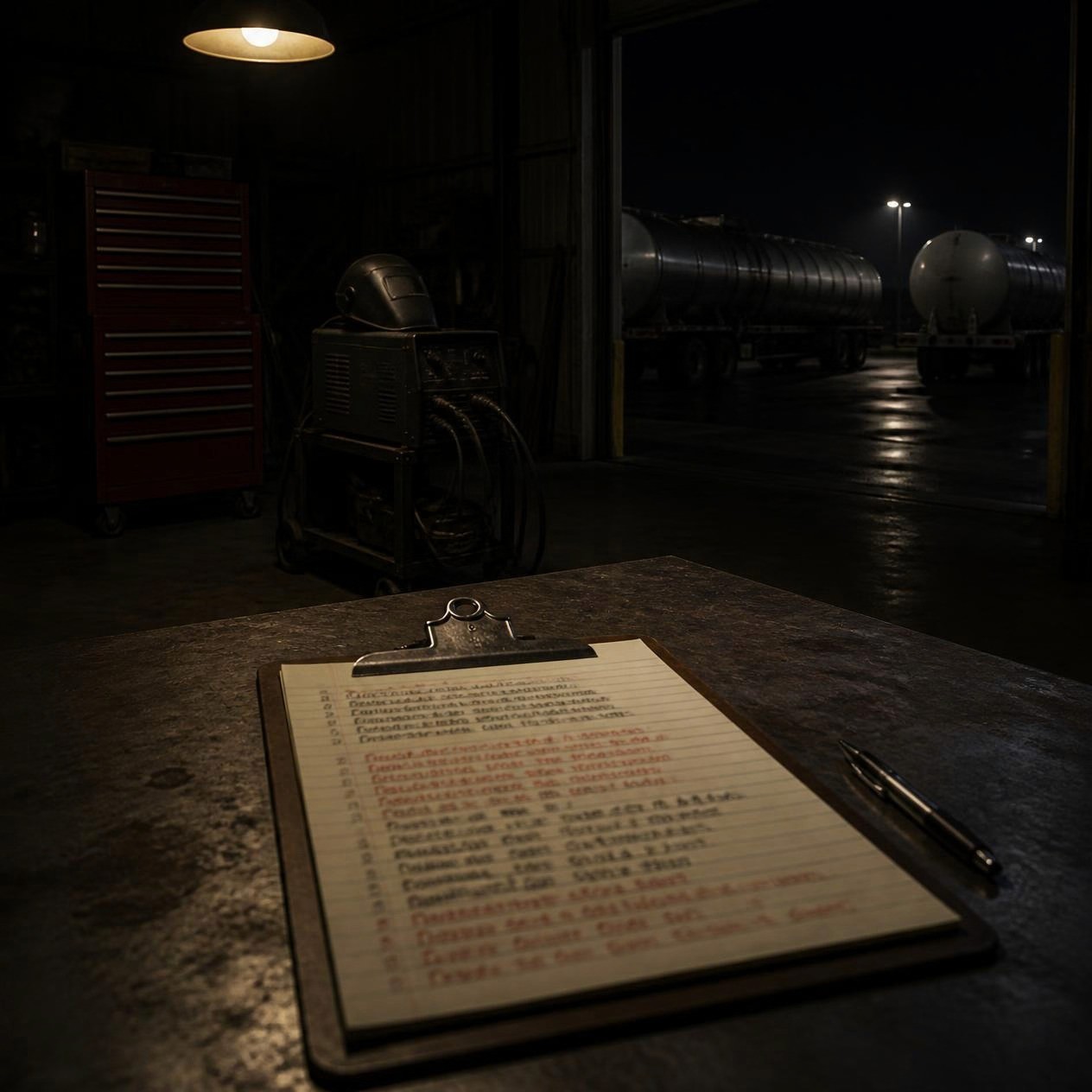
That defects sheet is where the bridge gets built. When I review it, I first go straight to the actual defect on the unit and inspect it myself. I take a good look at it and take a photograph of the defect, typically in order from the beginning of the list down. Then I add my own note below the technician’s defect item in a different color ink, so my notes stand apart from theirs. I also expand each defect item until it’s clear to everyone who may look at it later: the service writer building the estimate for the customer, the technician who didn’t do the inspection but may have to make the repair, and whoever builds the final invoice. Some technicians may not know how a given defect gets repaired, so I often write the method of repair on the sheet: whether to rebuild, replace, or fix it. And if the description has the location or the failure wrong, I do my best to correct it.
Estimate like a technician
Then I write down in front of each defect item my estimate of how long I believe the repair will take. And this part isn’t easy. I have to put on my “technician hat” and look at the defect from a technician’s perspective in order to work out the estimate. I literally have to pretend to be the technician and ask myself how I would fix this, what tools, resources, and processes I’d need, what steps it takes to do it right, and how long it would take. It’s never easy to come up with an exact number, because not every technician works the same way or at the same pace. But I try my best to get somewhere in the middle, between our best tech and the ones who are brand new, and that’s my sweet spot.
There are times when I have no clue how long it would take because the failure is so big and the scope is huge and requires weeks of work. In those instances, I turn to my team and veterans for help. Most shops have their champions and the old-timers who have been around since the beginning of time and literally came with the building. I am indebted to them for all of their wisdom, and for their patience with the endless technical questions I ask until I fully understand the scope of work.
One sheet, one truth
Once the sheet is done, everyone who touches the job sees the same version of it: service, parts, and whoever builds the quote. One version of the truth before the customer ever sees a number.
That process sets up the customer too. A quote built on clarified defects and a real time estimate gives them something solid to approve. They know what was found and what it takes to fix it, even though the final numbers may not always be exactly what we estimated.
While the customer decides, the technician doesn’t stand next to the unit waiting. I always reassign him to a different job, and either the cycle of inspection and diagnostics starts all over again, or it’s a repair job on different equipment.
Assign by fit, not by who’s free
Once the customer approves, the quote becomes many tasks on the work order. The first order of business is to review the work order and see what’s approved and what isn’t. Once I have a clear picture, I decide whether the technician who did the inspection should be the person who performs the repairs, or whether it should be someone else who may be a better fit based on experience, skill set, and availability. I also look at the urgency of the project. If a customer is screaming for the equipment back and expects it done yesterday, even though he just approved the estimate today, then I try to put one of our top guys on the job, if it makes sense. Once I’ve decided who, I give him the scope of work and the expectations. I’ll show him the photos if he asks, but most times he doesn’t, because that’s what the notes I’ve written on the sheet in a different color ink are for.
Plan backward from the finished job
It is harder to teach a technician to think and plan than to train him on a specific repair. So I plan with him at the start of most jobs. We go over the scope of work and the customer’s expectations, job by job, task by task. Then I teach him to work backward from the result we want. First, he has to understand how the equipment runs in its normal condition. But now that it’s broken, what is it supposed to look like when it’s fixed? Start from that picture and work back: the steps, the tools, the parts.
Our senior and lead techs are the exception. I don’t need to tell them anything besides what needs to be done, and often they’re the ones teaching me. And when they do, I always appreciate the opportunity to learn.
Parts before teardown
As for the parts department, they usually get told before the job starts, but that isn’t always the case when we’re very busy. The ideal situation is that the technician already knows what’s on the shelf and what isn’t before he rolls his toolbox over to the bay where he’s about to start work. The goal has always been that he should never find out a part is missing with the unit already apart.
Hand the decision back
Once he has the tools, resources, and clear expectations, he works the job, and I try my best to stay available. When a technician asks me to come look at something, I never hesitate to go look right away, but my follow-up is usually the same: What would you suggest we do about this? What’s your advice?
I’m there to help, but I want him to make the call, think for himself, and take ownership of the problem.
That’s the point of all of it. Ownership and preparation. A technician who planned the job owns it, and preparation is what makes that ownership possible.
Close the loop
The last piece is one of the most important. I’m the gatekeeper for the team and for the company. Our quality of work represents the organization, those who have come before us, and those who will come after us. It lives on with the shop’s name.
Because I reviewed the defects and documented the failure at the start, I’m the one who checks the finished work. I check the repair itself, whether it was physically done right; I check the process, whether the paperwork tells the true story of what was done; and I check the time on each task, because that time is what we’re selling as a service repair shop.
Nothing leaves the building until it’s tested and verified. A job isn’t done until it closes the loop. After that, I’m on to the next one, and the next one, and the next one.